Thursday, 02 September 2010
Advanced search

British brand power still has strength in depth

Vodafone tops this year’s Brand Finance list of the 50 most valuable brands of British origin, which paints a generally positive picture for the telecoms, retail and banking sectors.

For related case studies click on the relavant brand: Barclays, Vodafone, Asda, Co-op

This year’s Brand Finance list of the 50 most valuable brands of British origin reveals the value of the brand name to the companies’ bottom lines. The list spells out which brands are still suffering from the recession and which brands have been potent enough to ensure their owners’ rude health.  

The fact the list’s combined brand value is up to £199bn from £166bn last year, shows that British business is generally in a good state of health.

Three sectors showing signs of improvement are finance, telecoms and retail. Two banks occupy places in the top ten – HSBC has slipped from first to second place with a brand value of £17.61bn, while Barclays, at number six, has a brand value of £8.12bn (see case study, below).

Five out of the six banks that feature on the list show an increase in brand value, the exception being Lloyds TSB, which dropped six places to 33 after its brand value fell to £1.61bn.

Three telecoms brands are also in the top ten, with Vodafone topping the table (see case study, below) with a brand value of £17.93bn, up from £17.03bn. BT has climbed one place to number ten with a brand value of £5.37bn, meanwhile now French-owned Orange is at number four, down one place from last year, with a brand value of £11.35bn, down from £11.61bn in 2009.

Mobile brand O2, which was the market leader by share before the merger of Orange and T-Mobile, jumped four places in the table to number 16, with its brand value at £3.78bn, compared with £2.91bn last year.

Brand Finance chief executive and founder David Haigh points to Vodafone’s strong business in emerging markets such as India and Africa when he comments: “Vodafone in particular has done very well this year. But it isn’t necessarily because of its performance in the UK but because of its performance globally.”

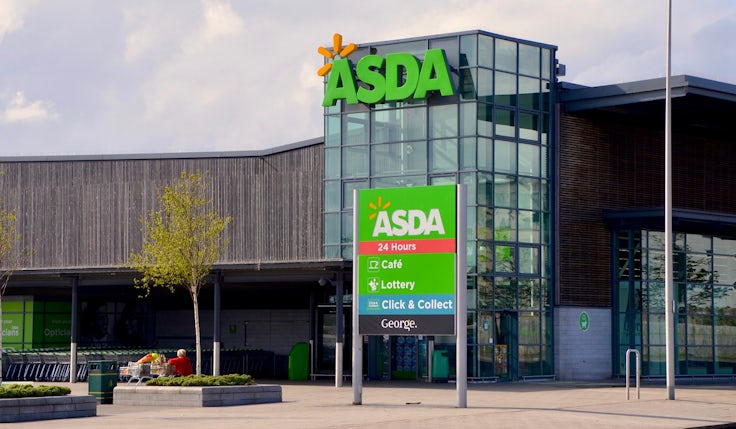
Retail also fares well in the Brand Finance UK table. While nine of the ten retail players in the top 50 remain in British hands, second-highest placed retailer Asda, which moved up seven places to number nine, has a US owner (see case study, below).

The Co-operative’s member-based structure and strong ethical stance has gained traction with the public, says Haigh. The retailer has moved up to number 19 with a brand value of £2.88bn, up from £2.22bn (see case study, below).

Highest-placed retailer Tesco has dropped one place to number three, despite its brand value rising to £12.77bn. The performance of rival supermarket Sainsbury’s is less impressive. Not only has it fallen two places to number 15, its brand value is down to £3.93bn.

Positive indicator
Asda’s strength in the UK, despite its foreign ownership, could be a positive indicator for Cadbury following its £11.9bn takeover by US firm Kraft earlier this year. Cadbury’s position has improved from 29 to 26, with its brand value up from £1.77bn to £2.02bn. Comparing the ownership of Asda and Cadbury, Haigh notes: “It doesn’t mean the brand itself is less British – it is how it’s managed and not who actually owns it.”

Haigh also points to Cadbury’s BrainJuicer emotional scoring (see About the Research, below) as an indication of how the brand may perform in the UK under Kraft’s ownership. The agency’s study, which assesses how consumers feel towards the Brand Finance top 50 UK brands, indicates a negative emotion of “sadness” towards the brand.

Respondents to the survey express concerns such as “we have sold a traditional British company to an American one”. Haigh comments: “The number of people responding favourably to the brand has gone down, which would indicate that the brand is weakening.”

Haigh says it is too early to tell whether this negative emotion will translate to a reduction in sales. “Kraft must start restoring public confidence in Cadbury if it doesn’t want to see the brand fall,” he adds.

Troubled brands BP and British Airways show signs of decline in this year’s league table. BA has fallen four places to 37, with its brand value at £1.29bn. BP fell one position to seven, pulling in a brand value of £7.49bn.

Both register slight declines in brand value. However, it should be noted that BP and BA’s brand value evaluations took place before the oil giant’s Gulf of Mexico disaster and before the height of the BA strike action.

According to BrainJuicer’s emotional evaluation, BP’s happiness rating has decreased, while ratings for emotions such as disgust, anger and sadness are all on the rise. BA’s troubles have also had a negative impact on the brand’s emotional response, attracting comments such as: “It is a shame that the staff who earn good salaries are running it into the ground by staging industrial action.”

The strength of both BA and BP will be tested in the next year, argues Haigh. “Will the strength of their brands pull them through such a difficult period? You could argue that the BP and BA brands are holding these companies together. BA has a strong brand with a large following despite everything that has happened.”

Overall, Brand Finance’s top 50 list of Britain’s most valuable brands demonstrates the positive state of British business and, for the most part, shows a revival of many brands in the retail, telecoms and banking sectors. But the age of austerity will test all sectors in 2010 and all marketers will have to manage their brands carefully to maintain their positions in the league table.

The significance of brand value as a percentage of an enterprise value

While Brand Finance’s list of the most valuable brands of British origin gives an insight into how some sectors have recovered more successfully from the recession than others, it is not ranked in order of brand value as a percentage of an enterprise’s total value.

Table topper Vodafone commands a brand value of £17.93bn, accounting for 16% of the total enterprise value. Much further down the list, Reebok can attribute 55% of its enterprise, or company value to its brand, even though it comes in at position 43 of the 50 listed brands.

But does this mean the Reebok brand is any more powerful than the Vodafone brand? “The percentage of the enterprise value indicates whether brand is a very important slice of that business,” explains Brand Finance chief executive David Haigh.

He points to the likes of B&Q, Benson & Hedges, Sainsbury’s and Morrisons as companies with a high brand percentage value. “The percentage for B&H (45%), for example, shows it is a powerful brand for historical reasons,” says Haigh. “In the case of Vodafone, the brand and enterprise value are increasing at around same rate. But with some brands you may find the percentage has decreased because the enterprise value recovered on the stock market. So it’s not always a clear cut, simple relationship.”

Another indicator of a high brand value, Haigh adds, is that the enterprise as a whole has potentially been undervalued. “What we have often found in the past is when you get a high brand value percentage, the share price often rises over the succeeding year. This would indicate that the enterprise is undervalued,” he says.

Case study: Barclays

Barclays’ brand valuation has jumped by more than 50% from £5.24bn last year to £8.12bn, which perhaps may not be reflected in its move of just two places from eighth position last year to sixth in the Brand Finance list. The total company value has more than doubled since last year to £34.73bn. 

But Barclays chief marketing officer for global retail banking Michelle McEttrick does not want to take all the glory for increasing the bank’s brand value.

“I’d like to think that we can take all the credit for the brand increasing in value but I think the brand valuation was artificially deflated last year because of the financial crisis,” she admits.

The public has become suspicious of all banks, even those that did not have to resort to government bailouts. But McEttrick adds that Barclays’ brand strategy has helped it retain a healthy position in the table.

She explains: “The two drivers are the fact that Barclays remains independent and our strong brand strategy. Our own research reveals that Barclays is seen as secure and trustworthy and these are things that are more and more important in a bank these days.”

Brands in the banking sector have been forced to become more engaging with their customers and look at how they can adopt a friendlier tone in their communications. BrainJuicer emotional scoring indicates that contempt towards Barclays has fallen in the last year, with 66% feeling neutral towards the business, compared with 55% in 2009, indicating that the bank’s communication strategy is starting to work.

McEttrick says: “The retail banks have got back on television with messages designed to engage people in their lives rather than selling individual products to them.

“Social media and communicating with a younger audience will be a major focus for staying close to customers. As we see more and more of our customers being involved in social media, we will be there,” she adds.

While McEttrick describes Barclays’ brand strategy as consistent, she says that it’s also flexible enough to address the different customer groups that each arm addresses, such as Barclays Capital, Barclays Business, and Barclaycard.

McEttrick even goes as far as to say that the quirky tone of Barclaycard’s advertising, through the “waterslide” and “rollercoaster” campaigns, has added more likeability to Barclays’ overall brand.‘

Case study: Vodafone

Vodafone, the last British member of the big five mobile networks, has been named the most valuable British brand in 2010, as calculated by Brand Finance.

Vodafone has nudged past last year’s league leader HSBC. Its brand value has jumped from £17.03bn last year to £17.93bn this year. Brand Finance has calculated that the brand value contributes 16% of company’s total value.

While the brand has strong British roots, it is its performance in foreign markets that has weighted heavily on its brand value, according to Brand Finance chief executive David Haigh. “Vodafone has been growing strongly outside the UK, but it has a tough battle in its home market.”

In a market that is oversaturated and where players have had to come to terms with how to offer new services to customers, Vodafone saw its market leader position taken by O2 about two years ago. Whether the merger of T-Mobile and Orange disrupts the industry further remains to be seen.

To overcome the growing concern that mobile networks are becoming commoditised like the utilities sector, Vodafone is associating its brand with events such as London Fashion Weekend and F1 racing, as well as “money can’t buy” rewards for its customers. And these associations are being noticed. BrainJuicer’s emotional assessment indicates that consumers mention its sponsorship of the McLaren F1 team in a positive way.

However, the phone company’s massive cost- cutting venture announced at the turn of the recession will now spread to the company’s marketing operations, with job cuts of around 10%. The challenge will now be to retain high brand value on a much tighter budget.

Vodafone viewpoint:

Bart Michels, managing director for brand consultancy Added Value, one of Vodafone’s agencies

From an economic perspective, Vodafone has a ruthless, iconic way of treating its brand identity. The way it has pulled together all its visual representations from the high street through to communications and increasingly online is becoming very effective. In the mind of consumers, it creates an obvious marker to associate Vodafone with quality.

Some of the media strategy Vodafone applies, particularly around airports, makes it omnipresent, so that wherever British people travel they have this very reassuring visibility of Vodafone as an iconic brand.

Vodafone is fundamentally a UK business, and I think UK consumers understand that. Combined with its economic scale, people trust it because it gives a sense of being solid and reliable. And in tough economic times, where people want to deal with brands they trust, Vodafone gives that sense of reassurance. A lot of the communications it has been doing recently about being the most trusted and reliable network in terms of quality and coverage reinforces that message.

The mobile brand has a single-minded strategy to be the quality international mobile provider, which will be as true for the UK as anywhere else. I think this will increase the brand value in the future.

Loyalty is very important to the brand. The assets it has, such as Formula 1 and the work it is doing around London Fashion Weekend, are going to become even more present in how it attracts and holds on to customers because it’s a way of rewarding people. This is going to form part of a greater value proposition that Vodafone has been investing in.

Case study: The Co-operative

Creating a more unified group of brands has seen The Co-operative Group reach 19th place in this year’s Brand Finance list, up from 24th spot last year. The brand’s value has grown by about a third from £2.2bn to £2.89bn.

Brand Finance chief executive David Haigh says The Co-op is a brand “worth noting”, after a greater consistency was implemented across all branches of The Co-operative supermarket following the appointment of chief executive Peter Marks three years ago.

The “Blowin’ in the wind” advertising campaign, which positioned The Co-operative as a retailer with a real difference “had great impact”, says Haigh. “The Co-operative has done a lot of work to cross-promote the different areas of its business compared with the old days when it was quite fragmented.”

The Co-operative spokesperson Russ Brady acknowledges: “Peter Marks took the business by the scruff of the neck and brought it together in a way it hadn’t been operating.

“Bringing all the businesses together under The Co-operative identity, including food and financial services, along with the travel, funerals, pharmacy, legal services and electrical, has been a major plus.”

A £2.5bn investment programme has included a focus on branding, store refurbishments and improvements to customer service. However, it is the brand’s ethical and social approaches that have resonated with the public, particularly its stakeholder structure, believes Brady.

He says: “The investment programme, running alongside our core strengths of ethics and responsibility and being a member-owned business, has been a powerful combination in a time where the perils of going down business models based purely on maximising shareholder returns and short-term profitability came to light.

“There is a clear contrast, and people have begun to see The Co-operative as a viable, mainstream alternative in the areas we work in. Our financial services arm is a good example because our member-owned bank didn’t need to ask the Government for a bailout.

“We stayed close to our members during the financial crisis, which even though we might have been labelled as boring and old fashioned, was seen as a virtue because we weren’t lending more than we were getting in. These things have really resonated with our customers and the wider public.”

The past three years has seen a doubling in profits, revenue and membership, thanks in some part to the acquisition of the Somerfield supermarket chain. A merger of the financial services arm with Britannia is also pending.

Despite such heavy commercial activity, The Co-operative’s social agenda is high on the company’s priorities. “It is not just about ‘giving back’ to communities, but is another way of demonstrating brand unity and strength,” says Brady.

“We make profits to give back to our members and to also increase our social footprint through our social goals agenda. Such goals are not something that are just centrally oriented, they are lived and breathed in each individual business with cohesion and consistency.”

Case study: Asda

It seems that starting a price war pays off. Budget supermarket Asda’s brand value has risen by more than a third from £4.12bn to £5.64bn, moving up seven places to ninth in the UK’s on the Brand Finance brands league table.

Asda strategic communications director Nick Agarwal insists that ongoing economic instability and public insecurity means that a value proposition is still crucial to the supermarket sector. He claims: “Our internal data suggests that people are still very nervous about what will happen on the economic front this year.

“We need to make sure we serve new customers as well as those who are still feeling financially challenged, especially with the increase in VAT and public sector cuts that are to come. We are very conscious that value is still going to be at the heart of what people want in the coming 18 months.”

Being a low price champion, not just in groceries but also in clothing, has helped to improve the supermarket’s image over the past year. BrainJuicer’s emotional scoring shows that consumers feel more positive towards the retailer this year, compared with 2009, considering the supermarket to be “good value for money”.

The George clothing brand has become a key part of what Asda offers, claims Agarwal. “It claimed the top spot for volume sales in the last calendar year ahead of Marks & Spencer, Primark and Debenhams. Clearly that shows how positively customers responded to us last year.”

However, an improvement to Asda’s core offering has also had an effect on the retailer’s brand image, he suggests. The supermarket has overhauled the majority of its UK own-label food and drink lines, with an increased focus on locally sourced produce. It also introduced a premium range last year, as upmarket competitor Waitrose introduced its own value “Essentials” line.

“Over the last year we have increased the quality of our food range, particularly what we do from a local sourcing perspective, such as stocking Cartmel sticky toffee pudding in Cumbria or stocking our meat counter in Hounslow from a local concessionaire,” explains Agarwal.

“There is still work to do but we are getting better at tailoring our ranges to the needs of local communities. That adds to a better customer perspective of us.”

About the research

Valuation consultancy Brand Finance uses a combination of financial results and market analysis to produce a list of the 50 most valuable brands with British origins. See www.brandfinance.com for more information.

In conjunction with Brand Finance, market research agency BrainJuicer has produced an emotional analysis of the brands. It asked 6,000 people to rate the brands on emotions such as happiness, sadness, contempt, disgust, anger, fear, surprise or neutrality.

Other rises to note

  • Standard Chartered up five places from 18 to 13. Brand value up from £3.3bn to £4.54bn.
  • Legal & General up five places from 41 to 36. Brand value up from £963mn to £1.34bn.

Other falls to note

  • Aviva down three places from 14 to 17. Brand value down from £4.19bn to £3.64bn.
  • RBS down two places from 28 to 30. Brand value down from £1.79bn to £1.76bn.
  • Lloyds TSB down six places from 27 to 33. Brand value down from £1.83bn to £1.61bn.
  • British Gas down four places from 31 to 35. Brand value up from £1.47bn to £1.49bn.
  • Unilever down ten places from 34 to 44. Brand value down £1.16bn to £1.04bn.

The top 50 british brands


Have your say

Mandatory
Mandatory
Mandatory
Mandatory

Jobs Search


Top Jobs

Sony Music logo

Sony Music's Strategic Partnerships team work with brands and agencies that are forward thinking, innovative and share the desire to connect with their target audience through music, the UK's #1 Passion

Sony Music logo

Sony Music's Strategic Partnerships team work with brands and agencies that are forward thinking, innovative and share the desire to connect with their target audience through music, the UK's #1 Passion

Jobs Search


Top Jobs